An independent travel guide
Discover Khao Yai
Thailand’s first national park, cool upland air, roaring waterfalls and wild elephants — plus vineyards, farm cafés and a growing choice of private villas. Plan a calm, well-informed trip with our practical guides.
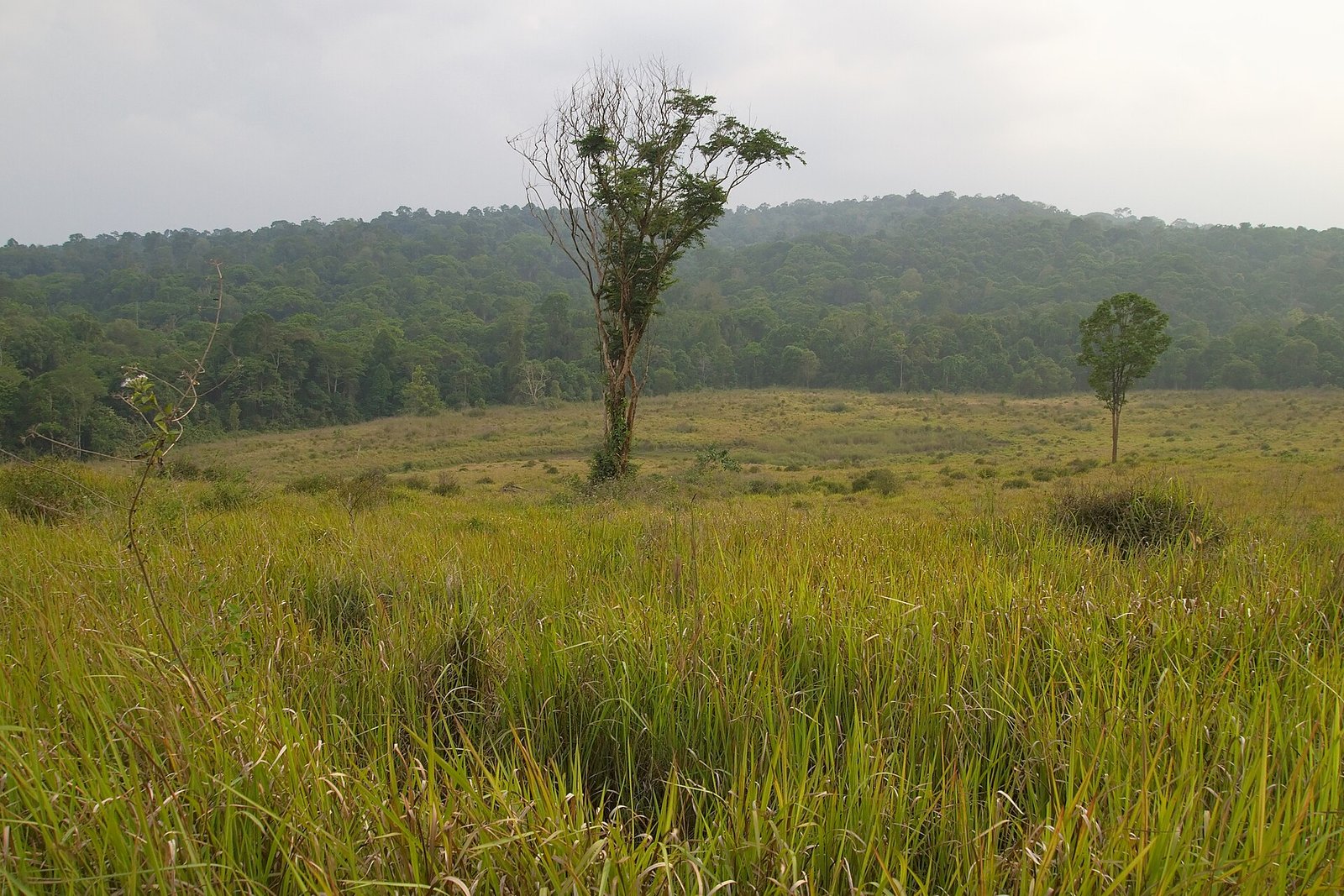
Cover photo: tall-grass meadow in Khao Yai National Park. Photo: Vyacheslav Argenberg via Wikimedia Commons, CC BY 4.0

Why Khao Yai belongs on your Thailand itinerary
Khao Yai National Park was proclaimed on 18 September 1962, making it Thailand’s first national park. It protects roughly 2,168 square kilometres of forest and grassland across four provinces, and it is the best-known part of the Dong Phayayen–Khao Yai Forest Complex, inscribed as a UNESCO World Heritage Site in 2005. For visitors this means something simple: a genuinely wild landscape — gibbons calling at dawn, hornbills overhead, elephants on the park road — within a few hours’ drive of Bangkok.
Outside the park boundary, the Pak Chong and Mu Si areas have become a weekend retreat for Bangkok residents, with wineries, dairy farms, restaurants and a wide range of places to stay, from campsites to secluded pool villas. This guide helps you combine both sides of Khao Yai without rushing either.
Start planning
Explore Khao Yai
Waterfalls, viewpoints, wildlife-watching towers, trails and the best things to do just outside the park.
Travel guides
How to get here from Bangkok, the best time of year to visit, park rules and sample 2- and 3-day itineraries.
Where to stay
Compare areas and accommodation types — from national park campsites to boutique resorts and private villas.
Khao Yai at a glance
| Topic | What to know |
|---|---|
| Park gates | Two main entrances: the northern gate on the Pak Chong side (Nakhon Ratchasima) and the southern Noen Hom gate (Prachinburi). The park lists gate hours as 06:00–18:00. |
| Entry fees | Foreign visitors pay a higher fee than Thai residents, plus a small vehicle fee. Check the current rates on the official park fee page before you go. |
| Climate | Cool season October–February (nights in December–January can fall below 10°C); rainy season June–September, when waterfalls are at their strongest; hot season March–May, though the uplands stay milder than Bangkok. |
| Getting there | By car or private transfer from Bangkok, or by train or bus to Pak Chong town and onward by taxi. See how to get to Khao Yai. |
Choosing a private pool villa?
A calm base for forest days
Many visitors pair early mornings in the park with slow afternoons at a private villa. Location, privacy and group size matter more than the photos suggest. Our independent guide explains what to compare and what to confirm before you book.
Last reviewed: 28 September 2026. Park rules, fees and closures change; always confirm with Khao Yai National Park before travelling.